Science News
 American
Science News for 1 December 2014
American
Science News for 1 December 2014
Kids Who Climb in Home More Likely to Land in ER
Live Science - 1 Dec 2014 23:55 Keep those kiddos off the furniture. A new study suggests that 3-year-olds who climb have nearly 10 times the risk of landing in the ER with a fall-related injury than kids who stay on the ground.
The smart mouse with the half-human brain
New Scientist - 1 Dec 2014 14:45
When human brain cells called astrocytes are let loose in mouse brains, they rapidly overwhelm the mouse cells and make the rodents smarter
Ning Xiang awarded the Wallace Clement Sabine Medal of the Acoustical Society of America
EurekAlert! - 1 Dec 2014 07:00
(Acoustical Society of America) Ning Xiang, Director of the Graduate Program inArchitectural Acoustics at Rensselaer Polytechnic Institute, has been awarded the Wallace Clement Sabine Medal by the Acoustical Society of A...
Amazon's Robot 'Elves' Help Fill Cyber Monday Orders
Live Science - 1 Dec 2014 23:36 To improve shipping efficiency, Amazon is using thousands of robots to gather products in its shipping centers on Cyber Monday.
A read head for quantum computers? Graphene layer reads optical information from nanodiamonds
Phys.org - 1 Dec 2014 23:01 Nitrogen-vacancy centers in diamonds could be used to construct vital components for quantum computers. But hitherto it has been impossible to read optically written information from such systems electronically. Using a ...
Study shows way to design 'digital' metamaterials
Phys.org - 1 Dec 2014 22:59 Metamaterials, precisely designed composite materials that have properties not found in natural ones, could be used to make light-bending invisibility cloaks, flat lenses and other otherwise impossible devices.
Invisible Dark Matter May Show Up in GPS Signals
Live Science - 1 Dec 2014 22:29 Dark matter might be made of clouds of energy cracks instead of particles and may be detectable in GPS signals.
Origins of Human Alcohol Consumption Revealed
Live Science - 1 Dec 2014 22:25 The ancestors of modern humans began evolving the ability to digest alcohol about 10 million years ago, new research finds.
Lassie text home: Pooches get technological
New Scientist - 1 Dec 2014 22:00
Dogs that help humans in danger can do so much more when they have technology designed especially for paws and noses (full text available to subscribers)
New Artificial Intelligence Challenge Could Be the Next Turing Test
Live Science - 1 Dec 2014 21:56 A recently released biopic of Alan Turing ("The Imitation Game") tells the story of the British mathematician and cryptographer who built a machine to crack the German Enigma code during World War II. But Turing is perha...
Hypnotising patterns created in electric soap films
New Scientist - 1 Dec 2014 21:30
Applying an electric field to soap films creates controllable swirling patterns, a technique that could make precise manipulation of liquids easier
Schrodinger's Cat and the Raiders of the Lost Quark
Physics Buzz - 1 Dec 2014 21:23
Last week's Black Friday officially ushered in this year's holiday shopping season. Undoubtedly, there are a few Physics Buzz readers seeking gifts for their physics-minded friends and family.Here's one possibility: a qu...
Random no more: Evolution isn't down to chance alone
New Scientist - 1 Dec 2014 21:00
Where do evolution's adaptations come from? Arrival of the Fittest by Andreas Wagner has some surprising answers
Rare, Early Motion Picture Taken by Arctic Explorers
Live Science - 1 Dec 2014 19:55 Watch some of the earliest motion picture taken in the Arctic by explorers in the early 20th century, narrated by Peary-MacMillan Arctic Museum Curator Genevieve LeMoine.
Synthetic enzymes hint at life without DNA or RNA
New Scientist - 1 Dec 2014 19:35
First ever enzymes made from XNA, an artificial alternative to DNA and RNA, reveal how life could have started and may work as long-lasting therapies
The Day You'll Prefer Robots to Humans
Singularity Hub - 1 Dec 2014 19:32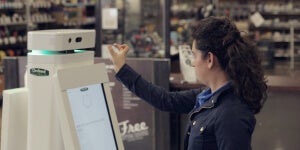 Finally, the robot revolution is arriving. There’s a Cambrian explosion in robotics, with species of all sizes, shapes and modes of mobility crawling out of the muck of the lab...
Today on New Scientist
New Scientist - 1 Dec 2014 19:30
All the latest on newscientist.com: the brain-zap backlash, free bitcoin for students, touching the void in VR, online wildlife trafficking and more
Scooter Accidents Send Kids To Hospital At Alarming Rate | Video
Live Science - 1 Dec 2014 19:18 In a study conducted by Nationwide Children's Hospital, researchers combed through 22 years of accident reports to find that foot-powered scooters have been the leading culprit behind emergency room visits for kids betwe...
Haptic holograms let you touch the void in VR
New Scientist - 1 Dec 2014 19:11
A system that enables you to feel and handle floating virtual objects with your bare hands is poised to bring virtual reality into the physical world
Scanning tunneling microscopy: Computer simulations sharpen insights into molecules
e! Science News - 1 Dec 2014 17:53
The resolution of scanning tunnelling microscopes can be improved dramatically by attaching small molecules or atoms to their tip. The resulting images were the first to show the geometric structure of molecules and have...
Ripples in Space-Time Could Reveal 'Strange Stars'
Live Science - 1 Dec 2014 17:24 Astronomers are searching for gravitational waves possibly emitted by "strange stars," superdense objects made of exotic matter.
New electrolyte for the construction of magnesium-sulfur batteries
e! Science News - 1 Dec 2014 17:22
The Helmholtz Institute Ulm (HIU) established by Karlsruhe Institute of Technology (KIT) is pushing research relating to batteries of the next and next-but-one generations: A research team has now developed an electrolyt...
 Global
 Great Britain
 Indian
 South Africa